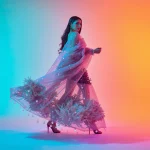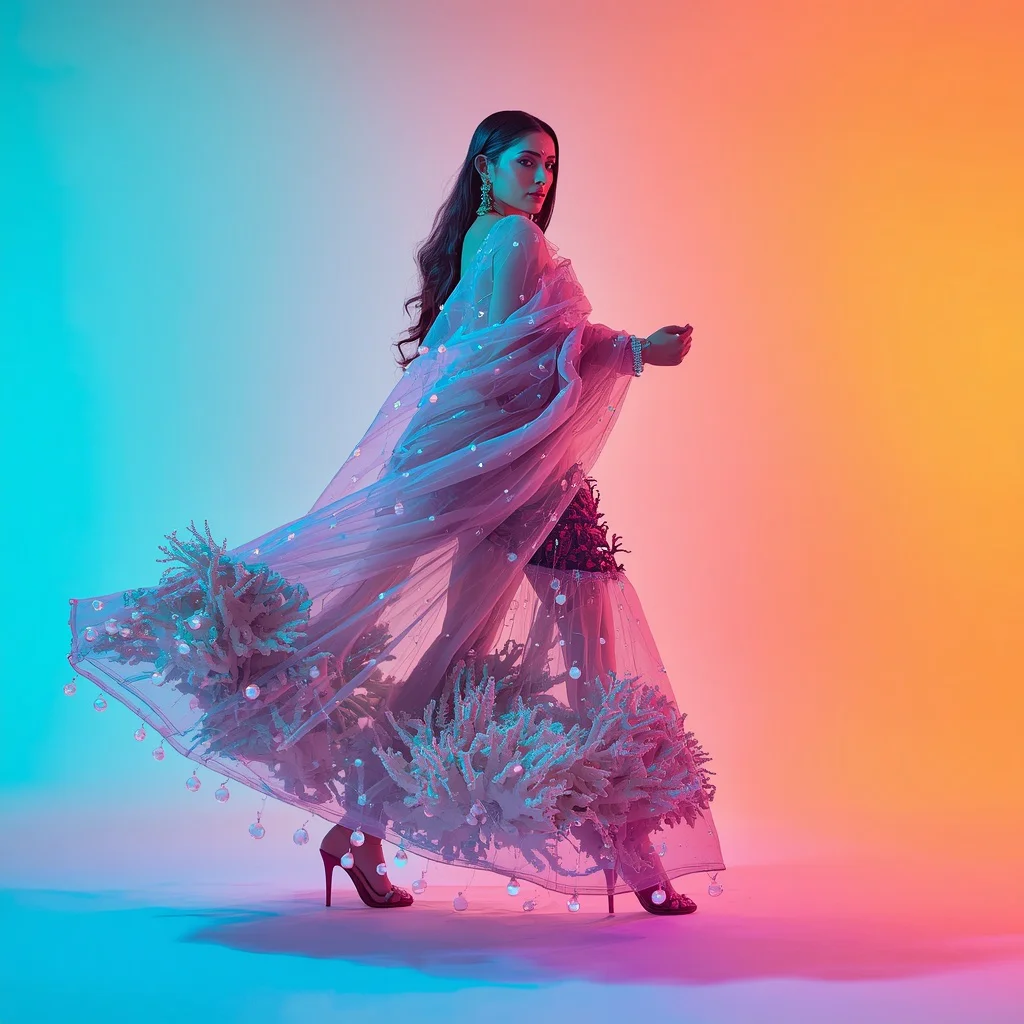


Discover how to craft breathtaking, high-motion photography using advanced artificial intelligence prompts designed for dynamic female dancers.
Capturing the raw energy, grace, and fluidity of dance has always been one of the most challenging feats in photography. It requires a perfect alignment of timing, lighting, and physical expression. With the advent of advanced artificial intelligence, designers and digital artists can now generate these complex, high-energy compositions without needing a physical studio or expensive high-speed camera rigs. By using precise prompting techniques, you can freeze a dancer in mid-air, surround her with swirling vortexes of color, or transform her wardrobe into cascading origami shapes.
This guide explores the art of generating lively women's dance photography with dynamic movement and colorful lights. We will break down the structural mechanics of these prompts, analyze why this aesthetic is dominating social media platforms, and show you exactly how to translate these concepts into jaw-dropping digital masterpieces. Whether you want to render a serene underwater silk dance or a high-energy glitch time loop, the prompts provided here offer the perfect creative foundation.
By understanding how to balance subject descriptions, clothing physics, and environmental lighting, you can unlock a new realm of artistic possibilities. Let us dive deep into the world of dynamic movement, glowing bioluminescence, and cinematic action that defines modern AI-generated photography.
What Are Women's Lively Dance Photography with Dynamic Movement and Colorful Lights?
This style of photography focuses on capturing the human form in active, high-energy states of motion, enhanced by surreal, colorful, or atmospheric lighting. Unlike static portraits, these images emphasize the kinetic energy of the subject. The clothing, background, and lighting elements all work together to suggest continuous movement. In AI generation, this is achieved by combining physical actions with fluid materials—like silk, paper, or glowing energy—that react to the imaginary forces of wind, water, or gravity within the scene.
Furthermore, this genre frequently incorporates fantastical elements such as bioluminescent gowns, digital glitches, or geometric fractal dimensions. The goal is to move beyond standard realism into a hyper-cinematic space where light behaves as an active participant, casting colorful reflections, neon glows, or soft golden hour shadows across the subject. It is a fusion of classical dance photography and high-concept digital art.
Why Women's Lively Dance Photography with Dynamic Movement and Colorful Lights Is Trending
In a crowded digital landscape, static images often fail to capture attention. Dynamic movement naturally draws the human eye, making these renders incredibly popular on visual platforms like Instagram, Pinterest, and digital art portfolios. The addition of vibrant, colorful lights—such as neon teals, hot pinks, and shimmering golds—creates a high-contrast look that pops on mobile screens. It provides an instant sense of premium quality and creative sophistication.
Additionally, these visuals tap into popular internet aesthetics like cyberpunk, dark fantasy, and surrealism. Users are constantly looking for unique profile pictures and story backgrounds that express energy, confidence, and artistic depth. By generating images that blend realistic human features with impossible physical scenarios—like a dress dissolving into thousands of paper cranes—creators can offer something truly novel and captivating to their audiences.
Popular Styles You Can Create
The versatility of these prompts allows you to explore an array of distinct artistic styles. Here are some of the popular aesthetics you can generate using the concepts from this collection:
- Origami Paper Cityscape Collage: A whimsical, geometric style where the woman, her dress, and the surrounding buildings are made of hyper-detailed folded paper, featuring scattering cranes and unfolding lotus flowers.
- Bioluminescent Deep-Sea Siren: An ethereal, dark aesthetic where a translucent gown behaves like jellyfish tentacles, glowing with vibrant neon-pink and teal light in a dark aquatic abyss.
- Mystical Forest Moonlight Journey: A atmospheric, dark fantasy style featuring a woman in a dark cloak walking along a foggy path under cool, piercing moonbeams.
- Glitch Time Loop Echoes: An avant-garde, futuristic look with pixelated distortions, translucent ghosting silhouettes, and layered frames depicting digital decay.
- Golden Lotus Fractal Dimension: A sacred geometry style where a flowing golden gown dissolves into infinite, repeating organic silk patterns.
- Glacial Crystal Palace Vortex: An ultra-premium ice queen aesthetic featuring an ice-blue couture gown with silver beadwork spinning inside a powerful crystal storm.
- Whispering Wind Desert Dune: A minimalist, high-fashion look with a voluminous, ultra-light fabric gown billowing dramatically on a windswept desert during the golden hour.
- Underwater Silk Flowing Dance: A serene, weightless style showcasing a woman submerged in deep blue water, with sunlight creating shimmering caustic patterns across her skin.
- Empowering Public Speaking Advocate: A realistic, high-impact style depicting a confident female leader gesturing at a podium under dramatic stage lighting.
How to Use Women's Lively Dance Photography with Dynamic Movement and Colorful Lights
Creating these images requires a structured approach to prompt writing. You cannot simply ask for "a dancing woman" and expect a masterpiece. You must build a descriptive narrative that guides the AI through the subject's pose, the movement of her clothing, the environmental elements, and the exact behavior of the light sources. By breaking your prompt down into clear, descriptive layers, you ensure that the generator produces a highly coherent and visually stunning result.
Start by defining the core subject and her physical action. Next, describe the texture and movement of her attire—this is crucial for establishing the sense of kinetic energy. After that, build the background scene, and finally, layer in the complex lighting directions. Let us look at a step-by-step workflow to achieve this.
- Select your primary theme, such as a physical dance style, a surreal fantasy environment, or a futuristic digital landscape.
- Describe the subject's pose, focusing on verbs that imply active movement, such as "gracefully billowing," "spinning," "swirling," or "leaping."
- Detail the wardrobe, specifying materials that react beautifully to movement, like light silk, folded origami paper, or liquid-like crystal.
- Incorporate dynamic environmental props or atmospheric elements, such as swirling sand, floating paper cranes, glowing spores, or falling mist.
- Define the color palette and lighting sources, using terms like "neon-pink and teal glow," "golden hour," or "cool moonbeams piercing the canopy."
- Set the camera angle and rendering style, such as "85mm lens," "cinematic close-up," "ultra-realistic textures," or "layered collage."
- Copy your finalized prompt text and paste it directly into your preferred AI image generator to run the render.
What Kind of Base Photo Works Best?
If you are using an image-to-image generator or utilizing a base photo for pose reference, choosing the right source image is critical. The best base photos feature clear, high-contrast silhouettes with clean lines of movement. A dancer in mid-leap or mid-spin with her arms and legs extended provides a strong anatomical guide for the AI. This prevents the generation of awkward or distorted limbs, which is a common issue in high-motion AI art.
Additionally, look for base photos with minimal background clutter. A simple studio backdrop allows the AI to focus entirely on the subject's form and easily replace the environment with your desired setting, whether it is a mystical forest floor or a sweeping desert dune. High-resolution images with sharp focus on the face and hands will also yield much better final textures.
Which AI Tools Deliver the Best Results?
There are several powerful AI image generators available today. Each has its own strengths when it comes to rendering complex fabrics, dynamic lighting, and human anatomy. Below is a breakdown of how you can use these prompts across different platforms.
| AI Tool | Best Use Case | How to Apply Prompt |
|---|---|---|
| Midjourney | Cinematic lighting, complex textures, and artistic collages. | Paste the highly descriptive prompt directly into the generator, adding aspect ratio parameters like --ar 16:9 or --ar 9:16. |
| Flux | High fidelity, realistic skin textures, and intricate clothing details. | Copy the detailed text prompt and run it with high-definition settings to capture embroidery and paper folds. |
| Leonardo AI | Vibrant fantasy themes and bioluminescent effects. | Paste your prompt into the generation window and select the Alchemy or PhotoReal pipelines for enhanced lighting. |
| ChatGPT | Refining prompt ideas and generating variations. | Paste the raw prompt concept and ask the model to expand the descriptive details before generating with DALL-E. |
| Gemini | Quick conceptualization and social media aspect ratio planning. | Input your desired dance style and use the generated output as a baseline for further visual iterations. |
Pro Tips
To elevate your renders from good to breathtaking, pay attention to the micro-details. Always specify the physics of the clothing. Instead of writing "a blue dress," write "an ice-blue couture gown with elegant flowing cape, natural realistic folds, pleats, and subtle drape physics." This tells the AI exactly how the fabric should hang and move in relation to the dancer's pose.
Another great tip is to leverage the power of multi-frame compositions or "collages" within your prompts. Terms like "cinematic collage featuring a luminous close-up, a side profile, and a full-body stance" force the AI to generate a cohesive set of images showing different angles of the same character, which is perfect for high-fashion and editorial concepts.
Common Issues and Quick Fixes
When generating high-motion dance photography, you may encounter a few common rendering errors. Here is how to quickly resolve them.
| Common Issue | Why It Happens | Quick Fix / Prompt Adjustment |
|---|---|---|
| Distorted or extra limbs | The AI struggles with complex, high-speed physical poses. | Simplify the pose description, use terms like "poised stance" or "elegant gesture," or use a clean base photo for guidance. |
| Muddled textures in paper/fabric | The prompt lacks specific structural and material keywords. | Add terms like "hyper-detailed," "folded origami paper," "hand-embroidered beadwork," or "ultra-realistic textures." |
| Dull, flat lighting | The environment is too simple or lacks active light sources. | Specify light behaviors: "sunlight filtering through water creating caustic patterns" or "pulsating neon-pink and teal glow." |
Frequently Asked Questions
What is the secret to generating realistic dynamic movement in AI dance photography?
The secret lies in using highly descriptive action verbs and motion physics in your prompt. Words like 'billowing fabric', 'swirling vortex', 'shattering digital echoes', and 'scattering paper cranes' instruct the generator to render realistic motion blur, dramatic draping, and convincing dynamic tension.
Can I use these prompts to create standard social media profile pictures?
Yes, these prompts are optimized for creating eye-catching portraits, especially for Instagram stories and profile pictures. By adjusting the aspect ratio in your chosen generator, you can create stunning vertical layouts that stand out.
How do I control the chaotic light reflections in underwater or bioluminescent renders?
Specify the lighting environment clearly. Use phrases like 'shimmering caustic patterns', 'diffused cinematic gradients', or 'deep-ocean dark with pulsating neon-pink glow' to guide the AI in scattering light naturally across skin and fabrics.
Conclusion
Mastering the art of lively women's dance photography using AI prompts allows you to create stunning, high-energy visuals that were once impossible to capture without a massive production budget. By focusing on dynamic movement, expressive posing, and complex, colorful light setups, you can produce images that are both commercially viable and artistically profound. Use the step-by-step guides, structural tips, and prompt concepts outlined in this article to push the boundaries of your digital art. Simply copy your favorite prompt, paste it into your tool of choice, and watch your creative visions come to life in spectacular, high-fidelity detail.